

AI phone systems hand off complex dental calls by packaging the entire conversation context into a structured summary before transferring the live audio stream to a human agent. This mechanism ensures the receptionist sees the patient's name, issue, and emotional state instantly. CX Bridge implements this via a shared dashboard where AI and human agents operate side by side. The result is a seamless transition where the patient never has to repeat their story.
The Context Packaging Mechanism
Traditional phone systems treat a transfer as a simple audio bridge. The caller is moved to a new line, and the new agent starts from zero. AI voice agents operate differently. They treat the transfer as a data event. Before the audio bridge is established, the AI compiles a context package. This package includes the caller's stated name, the specific dental issue, and any prior interaction history.
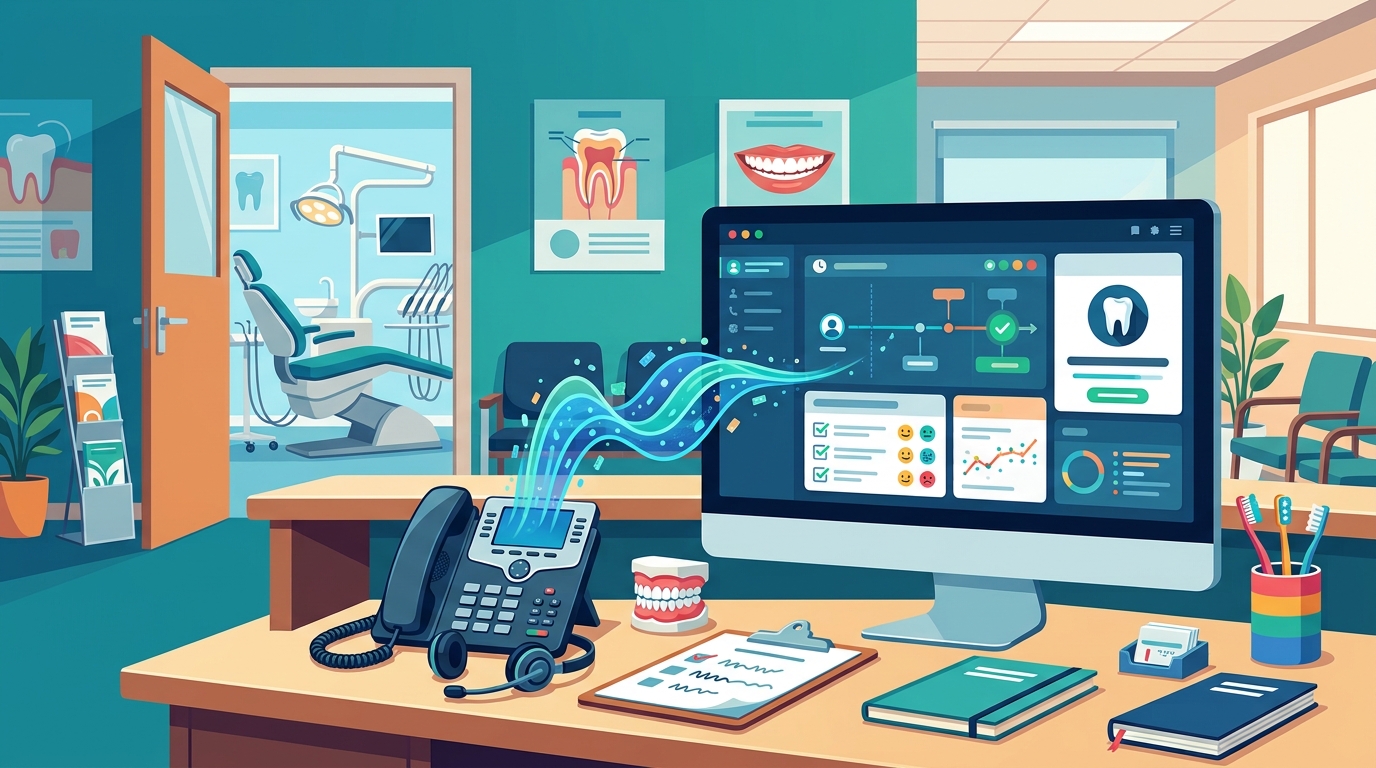
This context is pushed to the human agent's screen in real-time. The agent sees a summary card before they even say hello. This is not a transcript dump. It is a structured intelligence brief. The AI identifies the core problem and the patient's sentiment. The human agent then acknowledges this context immediately. This eliminates the friction of the "let me start over" moment.
Real-Time Dashboard Synchronization
The effectiveness of a handoff depends on the infrastructure connecting the AI and the human. CX Bridge uses a unified platform where both agent types share the same routing engine and customer context. When the AI decides to transfer, it does not just send the call. It updates the shared state of the conversation. The human agent's interface reflects this update instantly.
This synchronization is critical for dental practices. A patient might mention a cracked tooth and a billing question. The AI handles the booking but flags the billing issue. The human agent sees both items. They can address the booking and the billing concern in one continuous interaction. This shared view prevents information silos. It ensures that the human agent has the same knowledge base access as the AI.
Triggering the Human Transfer
Not every call needs a human. AI systems use specific triggers to decide when to hand off. In dental contexts, these triggers include clinical complexity, emotional escalation, and high-value negotiations. If a patient describes severe pain or uses distressed language, the AI recognizes this as a safety or empathy trigger. It initiates a warm transfer. The AI introduces the human agent by name and role. This builds trust before the human even speaks.
The AI also handles the logistics of the transfer. It manages the hold music or the brief pause. It ensures the human agent is available before connecting. This prevents the caller from being dropped into a void. The transition is smooth because the AI manages the timing. The patient feels heard, not processed.
Post-Call Intelligence and Continuity
The handoff is not the end of the AI's role. After the human agent resolves the issue, the AI can capture the outcome. This post-call intelligence ensures that the CRM is updated with the final resolution. The patient's record reflects the human agent's actions. This creates a complete audit trail. The practice can review the entire journey, from the AI's initial booking to the human's clinical advice.
This continuity is vital for patient retention. Patients appreciate when a business remembers their details. The AI ensures that the human agent has the full picture. The human agent ensures that the AI has the final outcome. This loop of information keeps the patient experience consistent. It reduces the risk of miscommunication between shifts or departments.
Key Takeaways
- AI handoff relies on context packaging, not just audio transfer.
- Shared dashboards allow human agents to see AI-compiled summaries instantly.
- Triggers for handoff include clinical complexity and emotional distress.
- Warm transfers with introductions build patient trust during the switch.
- Post-call intelligence ensures the CRM reflects the human agent's resolution.
- Unified platforms prevent information silos between AI and human teams.
Frequently Asked Questions
Does the patient hear a pause during the handoff?
There may be a brief pause while the system connects the human agent. The AI typically manages this by playing a short, natural bridge phrase. The patient is informed that they are being connected to a specialist. This transparency reduces anxiety and prevents the caller from hanging up.
Can the AI handle the billing question while the human handles the clinical one?
Yes, in some configurations, the AI can continue to handle routine tasks while the human addresses complex issues. However, most dental practices prefer a full transfer for complex calls. This ensures the human agent has full control over the conversation. The AI remains available for follow-up tasks after the call ends.
How does the AI know when to transfer?
The AI uses natural language processing to detect sentiment and complexity. It looks for keywords indicating pain, urgency, or confusion. It also monitors the length of the conversation. If the issue exceeds the AI's training scope, it triggers a handoff. This decision is made in real-time, often within milliseconds.
Is the context summary visible to the human agent?
Yes, the context summary is displayed on the human agent's screen. It appears as a structured card with key details. The agent can read this before or during the call. This ensures they are prepared to address the patient's specific concerns immediately.
Does this work for after-hours calls?
Yes, the handoff mechanism works 24/7. If a human agent is on call, the AI transfers the complex issue to them. If no human is available, the AI may take a detailed message and schedule a callback. The context is preserved in the CRM for the next available agent.
Conclusion
Seamless handoff is the defining feature of modern AI dental receptionists. It transforms the phone from a bottleneck into a smart routing system. By packaging context and synchronizing dashboards, CX Bridge ensures that patients feel heard and valued. Your team can focus on complex care while the AI handles the routine. To see how this works on your own calls, contact our team.